Anyone planning a truck wash bay on their own yard usually starts with a contractor: slab, drainage, interceptor, a hall and a plant room. For the inside of trailers it can go differently. This article sets side by side what you normally build and what is left when the wash installation is a 40ft container that arrives complete, and says which numbers only follow per location.
What do you normally build for a truck wash bay, and what does a container unit remove?
A built truck wash bay usually consists of a liquid-tight slab with a fall to a drain, a silt trap and oil separator for the wash water, a roof or hall, a plant room for pumps and chemicals, and a store for cleaning products. Add the checks with your local authority and water board and your installer's quote. For the outside of a truck, that list is right.
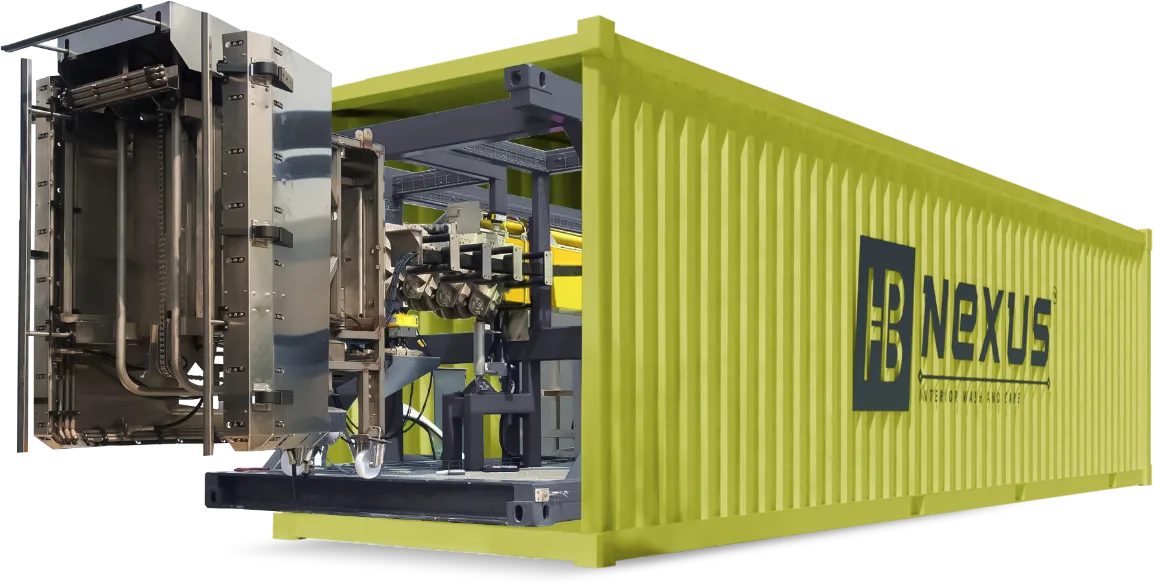
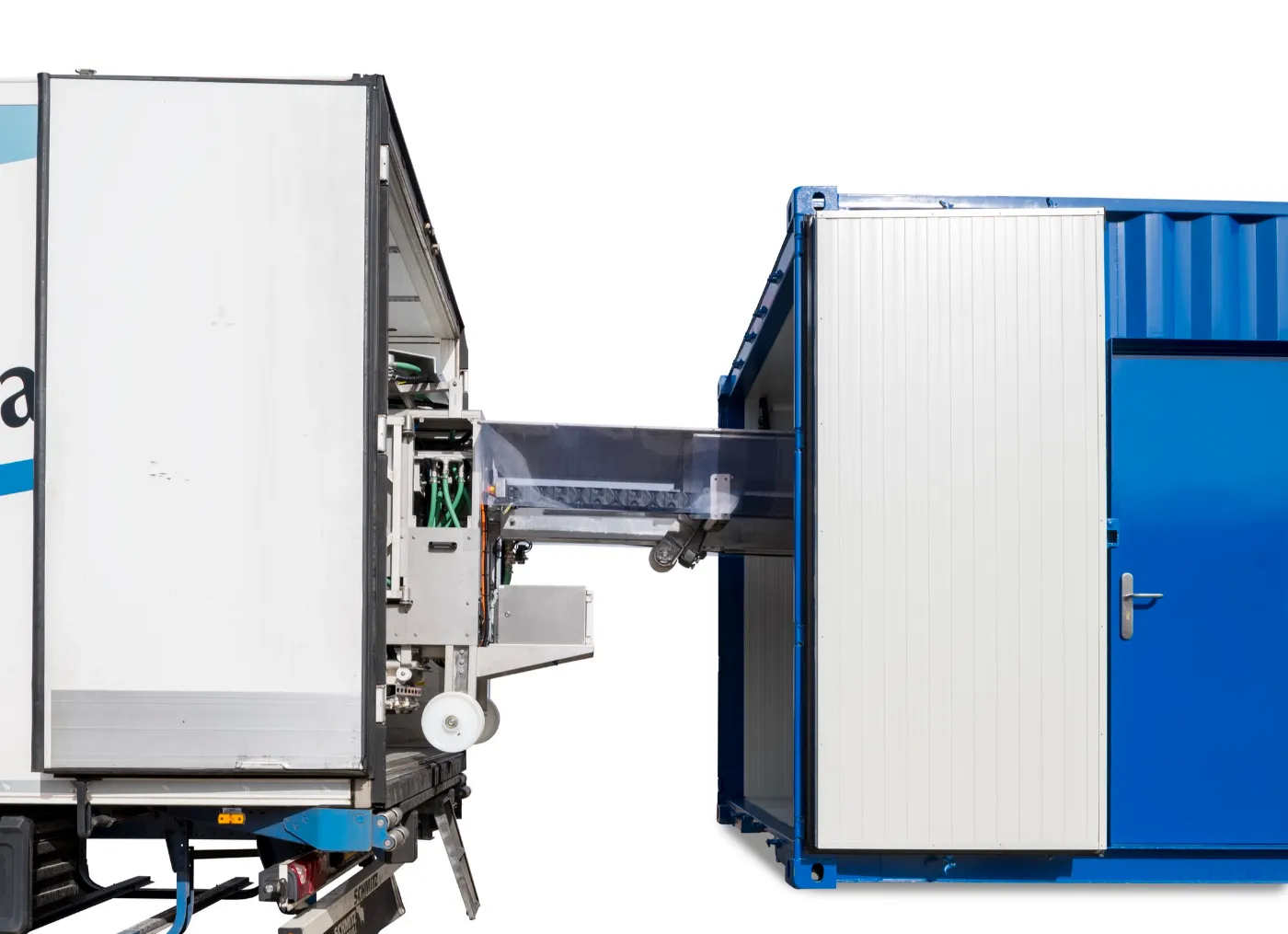
With the HB Nexus most of that list falls away, because the machine itself is a 40ft ISO container. The technical room with pumps, chemicals and controls sits inside it; the chemicals are sealed and dosed automatically, so nothing is stored at the wash spot. The wash happens inside the trailer, with a telescopic arm that drives out of the container along its full length, so there is no hall to build. What remains is the docking spot and three connections. How the machine is built inside is explained on the page about the robot.
How much space does a containerised wash unit need on your yard?
A containerised wash unit like the Nexus takes the footprint of a 40ft ISO container, plus a docking lane where a trailer or box container can stand square to the unit. The machine stays still; the vehicle comes to the machine. Because the wash takes place inside the container and the trailer, you allow no working area for people with lances around it.
When choosing the spot, the driving path matters most. A driver must be able to approach straight, dock, and leave after the wash without shunting. Keep the unit away from loading doors and storage, so a waiting trailer does not block loading, and pick a spot that is reachable at night, because the unit runs 24/7. Exact dimensions and the weight of the unit are not in this article: you receive them per location.
Which connections do you install for a container-based trailer wash?
Three: power, water and a drain for the wash water. A container-based trailer wash like the Nexus is plug and play, which means the unit arrives complete and is set onto existing connections rather than assembled on site. Pumps, dosing system and controls are already inside. What you install is the point the unit connects to.
The exact connection values, the consumption in litres and the demands on the drain differ per set-up. They depend on the number of wash cycles per day, the programmes you run and what already lies on your yard. You receive those specifications per location, so your installer knows what to lay. One thing is fixed: a Nexus wash cycle uses 50 percent less water than a manual wash, because the programme is fixed and the chemicals are dosed exactly. What that means for water demand and the drain is in our article on halving truck wash water usage.
Who operates the unit on your yard and what does the driver do?
Nobody operates the machine at the wash spot. The driver couples up, the collision protection and the sensors watch the docking, and the fully automatic control runs the programme for the type of load. No training is needed. You choose the wash programme per type of load in advance; after that it is the same action every time. After at most 15 minutes a full HACCP wash cycle is done and the certificate is in Nuvix.
That saves on the yard too. At a manual wash bay there are jerrycans, lances and a wet floor where people walk. With the Nexus, everything wet or chemical sits behind a door in the container; only the HB Group engineer goes in, at the monthly maintenance visit. You do not roster a shift around the wash: the unit runs 24/7, four wash cycles per hour, up to around 33,000 per year. Whether that volume pays off, you test in the ROI calculator. What it means for the people who still go into the box with a lance is in why nobody needs to enter the cargo space any more.
Item
Built wash bay
Container unit on your yard
Hall
Built around the vehicle
Falls away; the wash happens in container and trailer
Plant room
Built and fitted out
Inside the 40ft container: pumps, chemicals, controls
Chemicals
Stored and dosed at the wash spot
Sealed, dosed automatically
Spot
Liquid-tight slab and working area
Docking lane; ground per location
Power and water
To your own design
Connection point per the specification
Drainage
With separator, agreed with the water board
Same, for the wash water
Operation
Staff with lances
Nobody; the driver couples up
Connectivity
Not needed
Wifi for remote monitoring
What does the service agreement cover after placement?
The service agreement with HB Group covers three things: monthly maintenance, remote monitoring via wifi and automatic software updates. Faults are readable remotely, so HB Group knows what is going on before anyone is on the road. You do not set up a technical department around the wash, which with a built bay and your own pumps you would.
That is why the wifi connection belongs in the preparation. Without it the machine still washes, but nobody is watching along. With it, HB Group can monitor the unit remotely and read out a fault, and software updates arrive without an appointment. HB Group was founded in 2017 and knows the work from its own truck wash at Maasvlakte and Europoort, so the maintenance is done by people who know what a wash site does to a machine.
How does the build run from demo to first wash?
Broadly in five steps, without a fixed lead time: that depends on what already lies on your yard and on how quickly your coordination with the local authority and water board is settled.
Demo: you see the machine run and discuss your types of load and your volume.
Site check: the docking lane and the existing connections are reviewed and you receive the specifications per location.
Preparation: your installer lays power, water and drainage at the agreed spot, and you settle the discharge of wash water.
Placement: the 40ft container is set down and connected; it is plug and play.
First wash: the driver docks, the programme runs and the first HACCP certificate is in Nuvix.
For a built bay, the largest vehicle plus the working area around it sets the size. For a container unit like the HB Nexus it is the 40ft ISO container plus a docking lane where a trailer can stand square to the unit and leave again without shunting. The exact dimensions and the weight of the unit are supplied per location during preparation.
Do I need a permit or consent to discharge for a truck wash bay?
+
That depends on your location and on what you discharge, and it does not change because the wash installation is a container. Ask your local authority and water board what applies to discharging wash water on your site before you install the drain. HB Group supplies the specifications per location; the coordination with the authorities stays with you.
What utilities does a container-based trailer wash need?
+
Power, water and a drain for the wash water. The values differ per set-up and are supplied per location: the number of wash cycles per day, the programmes you run and what already lies on your yard determine them. Ask for them before you have an installer quote. What is fixed: a Nexus wash cycle uses 50 percent less water than a manual one.
How much does it cost to build a truck wash bay?
+
Two items. The groundwork on your yard, so docking lane, power, water and drainage, is quoted by your installer from the specifications for your location. The unit itself is priced on request. Whether the volume on your yard carries a unit of your own is something you test in the ROI calculator, which works with wash cycles per day rather than build costs.