Why nobody needs to enter the cargo space any more
·5 min read·HB Nexus
Anyone who has ever cleaned the inside of a thirteen-metre trailer with a lance knows why this work is getting harder to staff. It is wet, it is slippery, there are chemicals in the air and it often has to happen at moments when the rest of the yard is busy too. HB Group faced that problem daily at HB Truckwash at the Maasvlakte and Europoort. The Nexus was built to take exactly that work off people's hands. This article explains which technology makes that possible and why the result is not only safer, but also more constant.
Why is cleaning a cargo space by hand a risk?
The combination is the problem. A wet floor is slippery. A slippery floor in an enclosed space with chemicals and a lance under pressure is a workplace where a misstep has consequences. Add to that the fact that the work is heavy and that concentration drops at the end of a shift. The HB Nexus one-pager names the effect of the machine on that risk: 99 percent fewer claims and accidents, because there is no longer a wet, slippery and chemical workplace.
Who still does anything during the wash cycle?
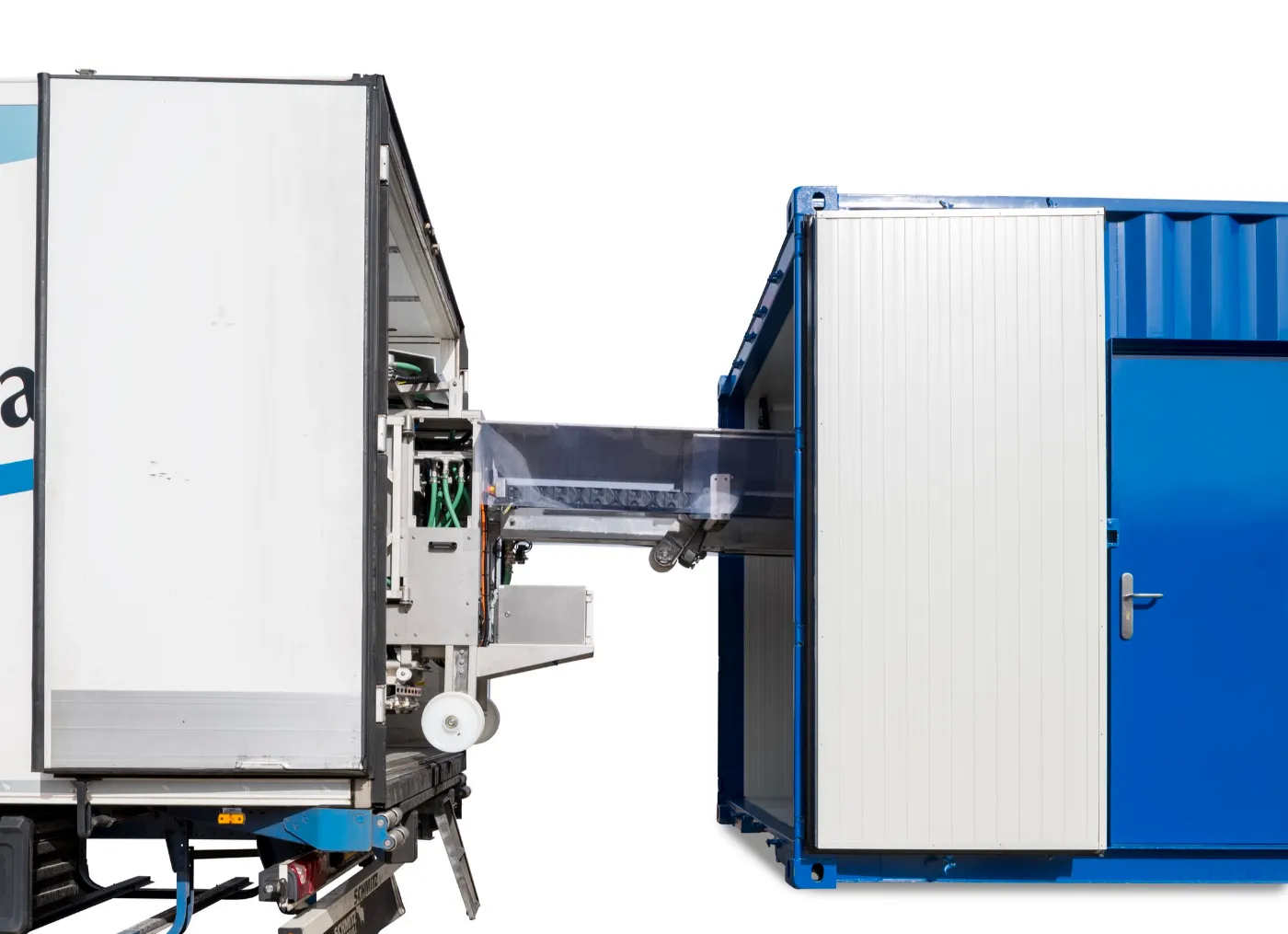
The driver. They drive the trailer or container to the Nexus and dock. After that the machine does the rest and no operator needs to be at the wash site. No training is needed either: docking is the only thing a person does. The staff who used to stand in the cargo space no longer stand anywhere.
How does the machine prevent damage during docking?
Docking is the moment at which a thirteen-metre vehicle and a machine approach each other. That is where the collision protection sits: sensors monitor the process and keep machine, vehicle and staff apart. It is not an instruction on a sign, it is built into the machine. If the position is not right, the arm does not go in.
What does the telescopic arm do in the cargo space?
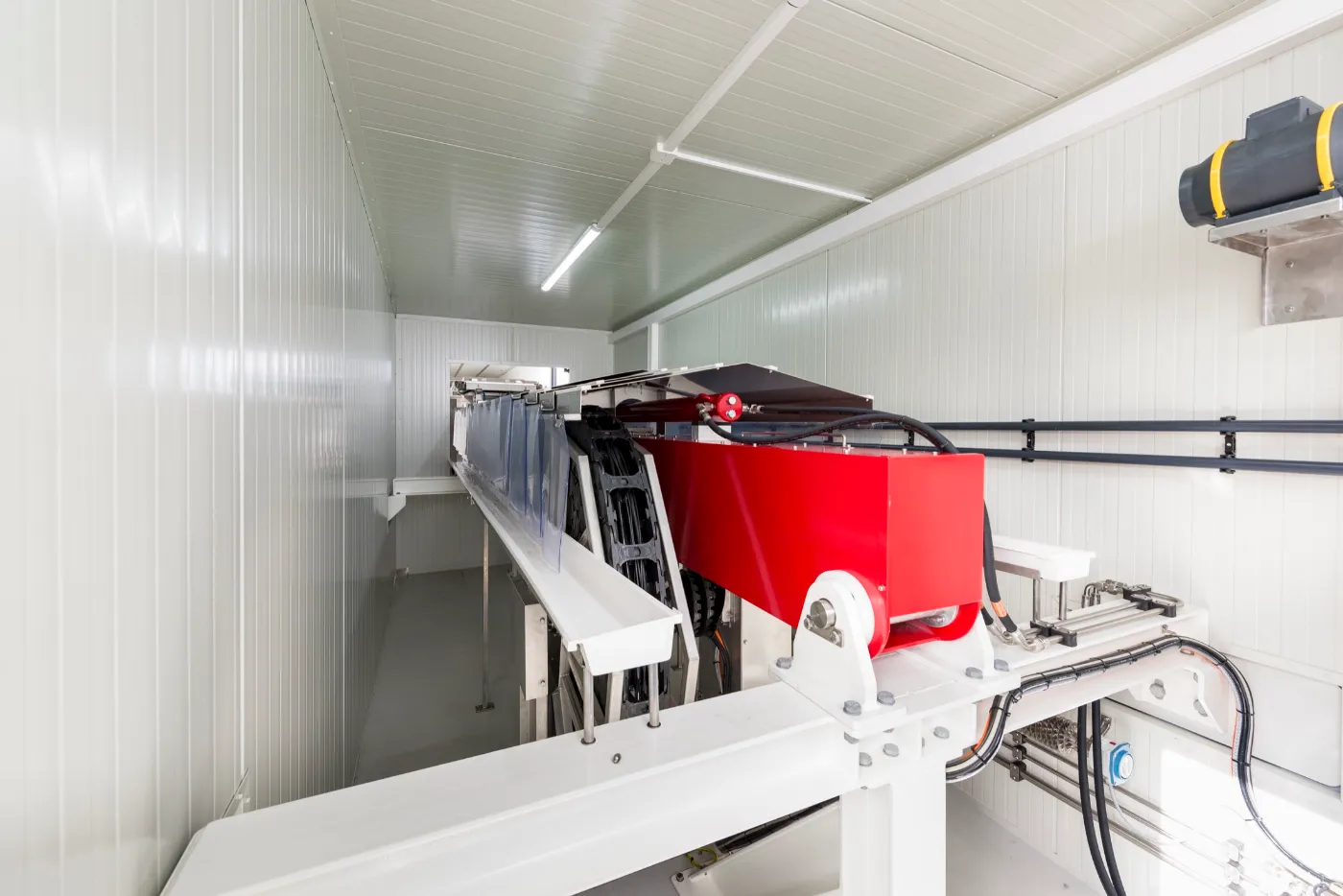
As soon as the trailer is docked, the telescopic arm travels the full length of the cargo space. At the end is the wash head with rotating nozzles, which cleans floor, walls and ceiling. The arm works according to a fixed programme per type of load, so every square metre gets the same treatment, regardless of the time of day or who is on shift. A full HACCP wash cycle takes a maximum of 15 minutes.
Where are the chemicals and who comes into contact with them?
Nobody. The chemicals sit in a sealed technical room, together with the pumps and the controls. The dosing system delivers an exact quantity per cycle with a fixed contact time. There is no jerrycan at the wash site, no mixing by eye and no lance blowing chemicals into the air. That makes the wash site safer, and it makes consumption predictable: every cycle is the same.
Who operates the machine?
The controls are fully automatic. There is a programme per type of load, and that programme determines the dosing, the contact time and the movement of the arm. Maintenance runs through a service agreement with HB Group, with remote monitoring via wifi and automatic software updates. Faults can be read out remotely, so an engineer already knows what is going on before arriving. So there too nobody stands in the cargo space to see what is wrong.
What does this mean for the wash result?
A machine that does the same thing every time delivers the same result every time. That is the core of 100 percent consistent: no varying quality per shift or per washer. How clean that is was measured independently by CCD Cleaning Consultancy in November 2024: 63 percent less microbial load after a Nexus wash cycle. And every wash cycle is recorded with a HACCP certificate via Nuvix, so the result is demonstrable too.
Collision protection: sensors protect machine and vehicle during docking.
Telescopic arm: travels the full length of the trailer or container.
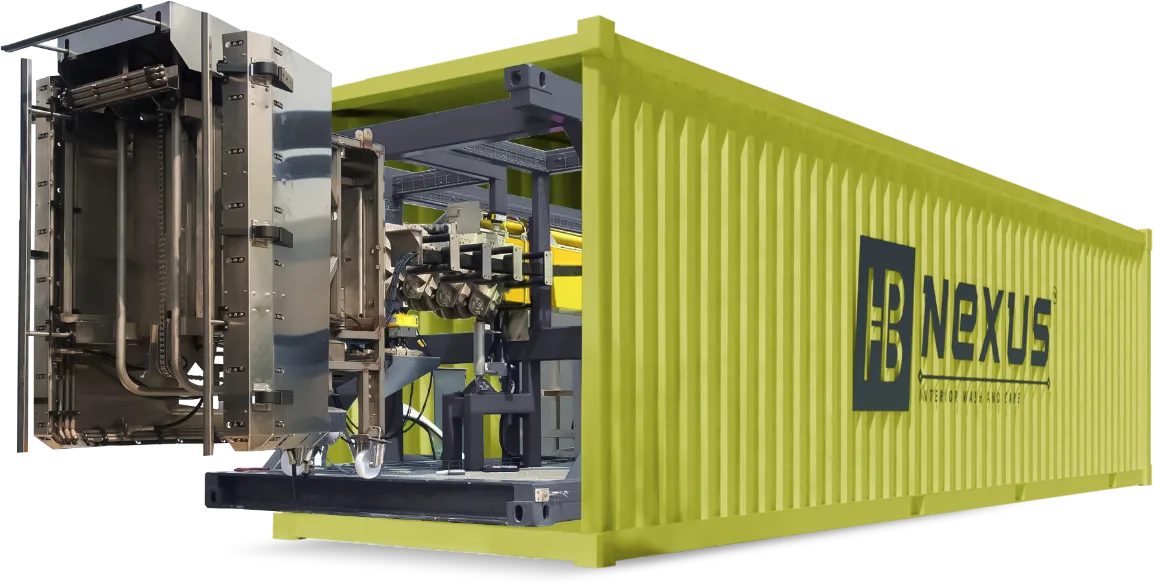
Wash head: rotating nozzles clean floor, walls and ceiling.
Sealed technical room: chemicals, pumps and controls behind a closed door.
Dosing system: exact chemical dosing and contact time, identical every cycle.
Fully automatic controls: no operation needed, programmes per type of load.
The page about the robot lists all components together, with the specifications we do know and the honest note about the specifications we calculate per set-up.
Yes. Nobody enters the box any more: the robot does the work. The chemicals are kept in a sealed technical room and dosed automatically, and collision protection with sensors always keeps machine, vehicle and staff apart.
Is training needed to operate the machine?
+
No. The driver docks the vehicle and the machine does the rest. No operator or controls are needed at the wash site.
What kind of contamination can the Nexus handle?
+
From food residues to chemical residues, without intermediate manual cleaning. You choose the right wash programme per type of load.
How is the machine maintained?
+
Through a service agreement with HB Group: monthly maintenance, remote monitoring via wifi and automatic software updates. Faults can be read out remotely.