What is a trailer cleaning system, and how does a robotic one work?
·6 min read·HB Nexus
The term trailer cleaning system covers a lot: from a wash bay with a person and a lance to a fully automatic installation in which nobody enters the cargo space. That range is exactly why buyers search for it. They want to know what such a system does, what it consists of and what it changes on the yard. This article answers those questions using the HB Nexus, the robotic system HB Group built from its own truck wash at the Maasvlakte and Europoort.
What does a trailer cleaning system do?
It cleans the inside of a trailer or container so that the next load can go in. In food, pharma and chemicals that is not a courtesy but a condition: residues of the previous load have to be gone to the level that certifications in those industries require. A cleaning system therefore has to do three things: reach the whole interior, apply the right cleaning per type of load, and make it possible to show afterwards that the cleaning happened.
A manual set-up does the first two with a person and a lance and the third with a logbook. A robotic system does all three with a machine. That difference determines almost everything else: throughput, consistency, safety and evidence.
What does a robotic trailer cleaning system consist of?
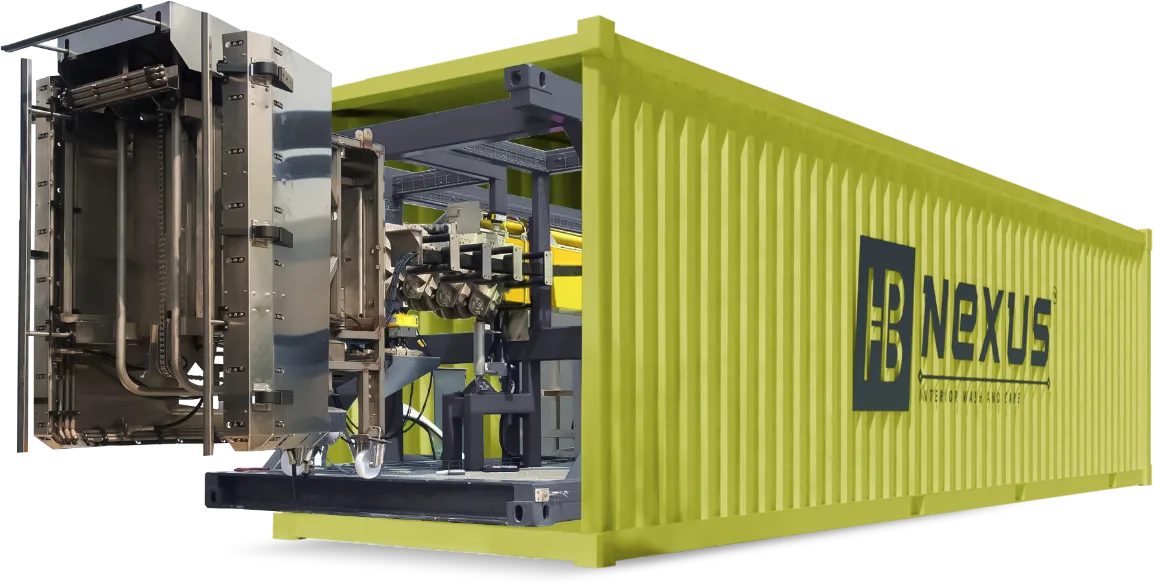
The HB Nexus is built into one 40ft ISO container. Everything the system needs sits inside: the arm, the wash head, the chemicals, the pumps and the controls. Placing it means putting it down and connecting it, without rebuilding the yard. These are the six parts you see on the machine.
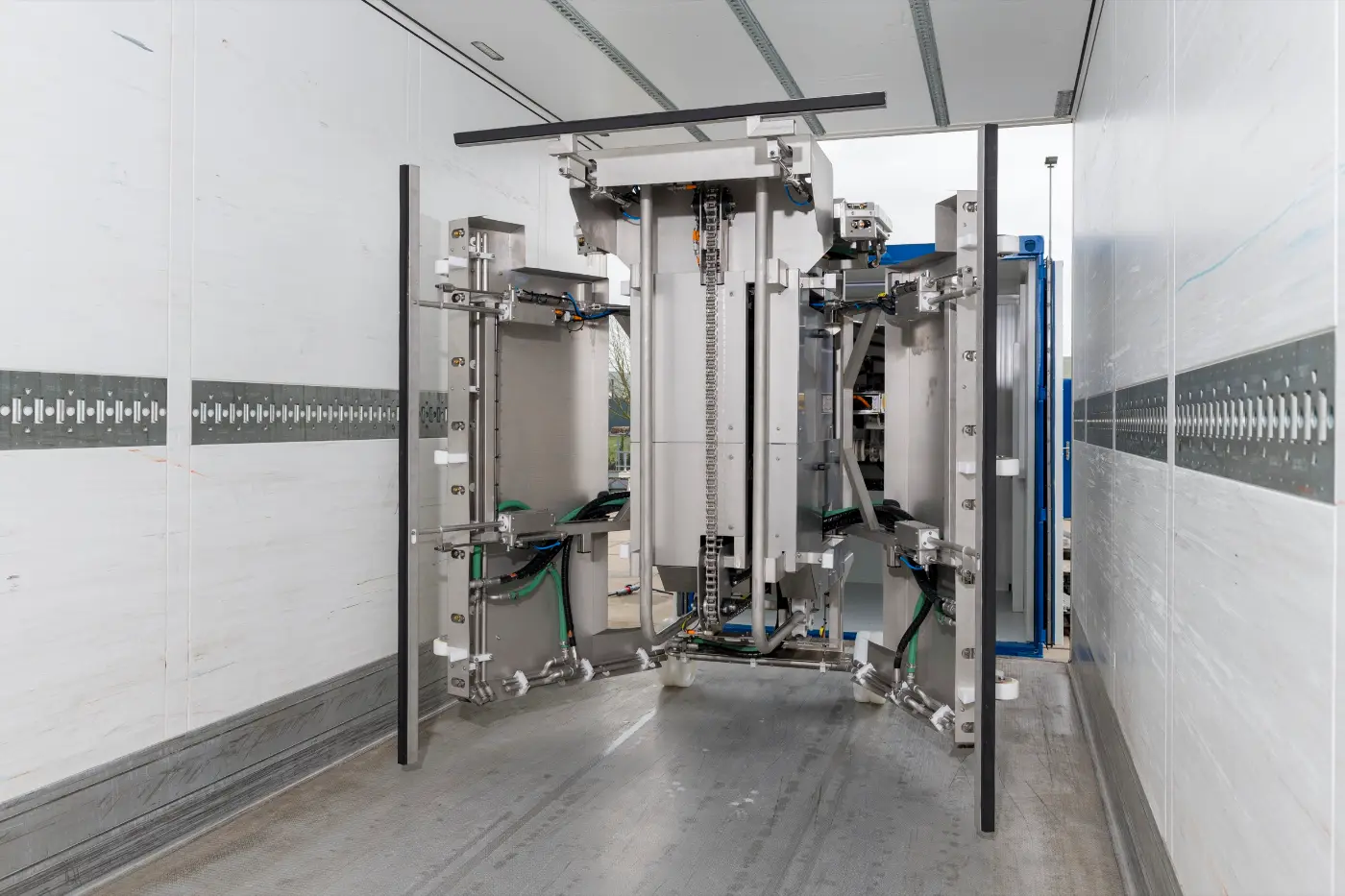
Wash head: rotating wash nozzles clean floor, walls and ceiling.
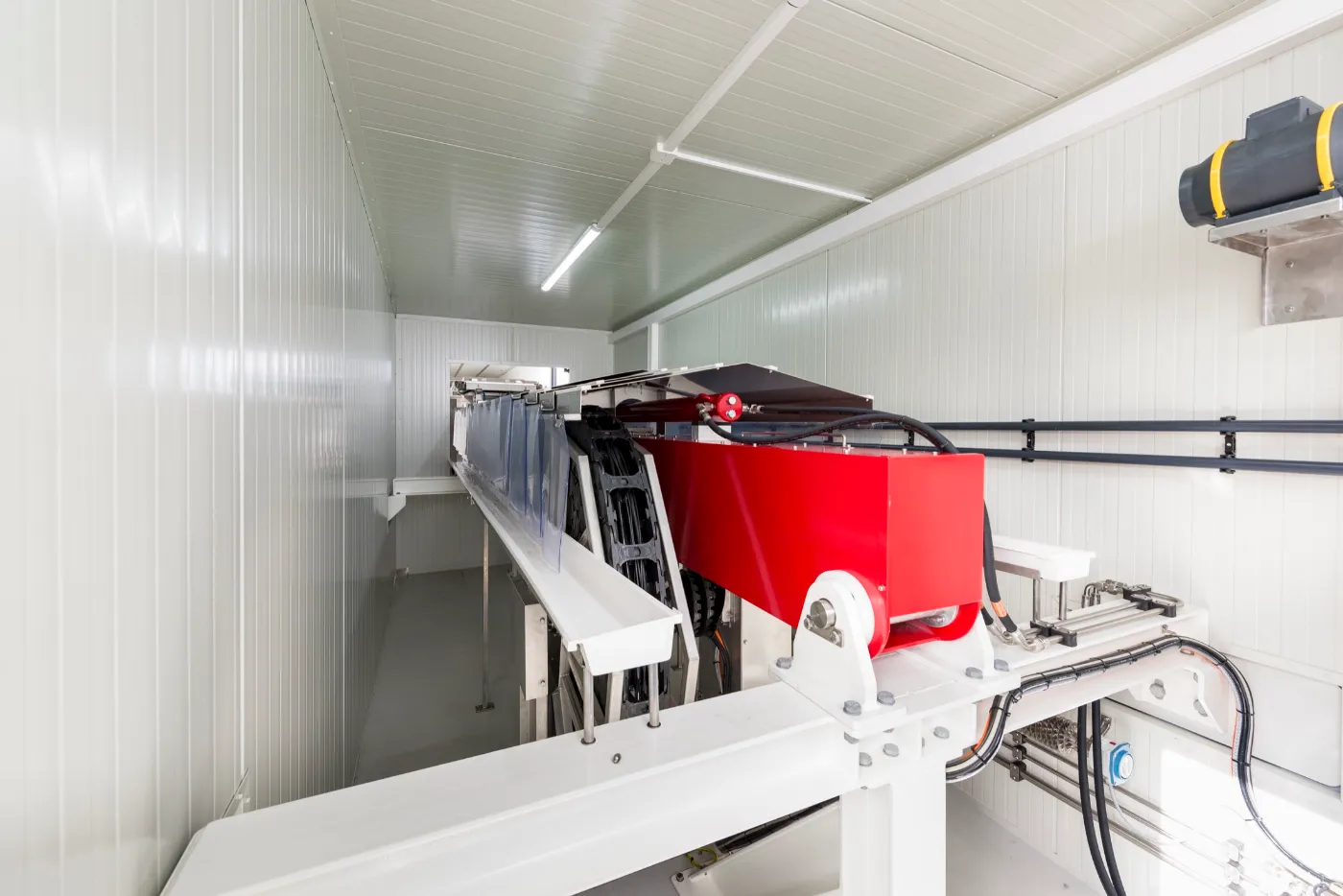
Telescopic arm: travels the full length of the trailer or container.
Collision protection: sensors protect machine and vehicle during docking.
Dosing system: exact chemical dosing and contact time, identical every cycle.
Fully automatic controls: no operation needed, programmes per type of load.
Nuvix software: planning, registration, invoicing and customer portal.
The chemicals and the pumps sit in a sealed technical room at the back of the container. Nobody at the wash site handles them; the dosing system does that per cycle. That is the first reason the system is safer than a manual set-up, and the first reason its consumption is predictable.
How does a wash cycle run?
A wash cycle has three steps. The driver docks the trailer or container at the Nexus; collision protection and sensors monitor the whole process. The wash head then moves inside and cleans the entire interior according to the programme for that type of load. Finally the wash cycle is registered automatically with a HACCP certificate via Nuvix. The driver is the only person involved, and docking is the only thing they do.
A full HACCP wash cycle including disinfection takes a maximum of 15 minutes. That is four wash cycles per hour, day and night, because the system is designed for continuous operation. One unit can handle up to around 33,000 wash cycles per year.
Is a robotic system actually cleaner?
Yes, and that has been measured rather than claimed. CCD Cleaning Consultancy tested the HB Nexus independently in November 2024 and found 63 percent less microbial load after a Nexus wash cycle. The one-pager summarises it as 33 percent cleaner than manual washing, independently proven. The full report is available on request.
The reason is not that the machine works harder than a person. It is that the machine works the same every time. A fixed programme with a fixed dosing and a fixed contact time gives a 100 percent consistent result: no varying quality per shift or per washer, and no difference between Monday morning and the end of a Friday shift.
What does the system record?
Every wash cycle produces a digital HACCP certificate via Nuvix. It shows the wash cycle number, the licence plate of the vehicle, the programme that ran, the actual duration of the cycle and the status of the registration. The certificate is created the moment the cycle is completed, so nobody fills anything in afterwards and nothing can be added later.
All certificates are in the Nuvix customer portal and can be searched per vehicle and per date. For an audit that means a filter and an export instead of a folder and a phone call to whoever was on shift. Nuvix also plans and invoices the wash cycles, so the machine and the administration come from the same house.
What does it change on the yard?
Three things. Nobody stands in a wet, slippery cargo space with chemicals any more, which is where the one-pager's figure of 99 percent fewer claims and accidents comes from. The wash site no longer needs staff, because the driver docks and the machine does the rest. And the water use per wash cycle drops by 50 percent compared with manual washing, because the system doses instead of spraying.
Question
Manual set-up
Robotic system (HB Nexus)
Who is in the cargo space?
A washer with a lance
Nobody; the arm does the work
How long does a wash cycle take?
Varies with washer and dirt
Maximum 15 minutes
Is the result the same every time?
Differs per shift
Fixed programme, 100 percent consistent
How is it proven?
Logbook afterwards
HACCP certificate per wash cycle via Nuvix
Who operates it?
Trained washer
No operator; the driver docks
Water per wash cycle
Undosed
50 percent less than manual washing
Who maintains a robotic trailer cleaning system?
For the HB Nexus that runs through a service agreement with HB Group: monthly maintenance, remote monitoring via wifi and automatic software updates. Faults can be read out remotely, so an engineer already knows what is going on before arriving. Full technical specifications such as dimensions, connection values and consumption in litres differ per set-up and are provided per location.
The page about the robot shows all components together with the specifications we do know. If you want to see the system at work, book a demo and you see a full wash cycle from docking to certificate.
An installation that cleans the inside of trailers and containers: floor, walls and ceiling. It ranges from a manual wash bay to a fully robotic system such as the HB Nexus, in which nobody enters the cargo space.
How does the HB Nexus work?
+
The trailer docks, the telescopic arm moves inside and cleans floor, walls and ceiling according to a fixed programme. Every wash cycle is therefore identical, and every wash cycle produces a HACCP certificate via Nuvix.
Which industries is a robotic trailer cleaning system suitable for?
+
A wide range of industries, including the food industry, the pharmaceutical sector and the chemical industry. The machine removes residues to the level that certifications in those industries require.
Does the system need staff?
+
No. The driver docks the vehicle and the machine does the rest. No operator or controls are needed at the wash site, and no training is required.