A truck wash cleans the outside. That is a purpose-built lane, a fixed throughput time and a predictable revenue per vehicle. The inside is a different trade. There is no lane there but a person, with a lance, inside the cargo space. This article is about what changes when you want to add that second activity, and why the bottleneck is rarely the technology.
Why is interior cleaning a separate trade?
Because the work is inverted. On the outside, the installation moves around a stationary vehicle. On the inside, someone has to enter the space, thirteen metres deep, with water and chemicals, on a floor that turns slippery the moment they start. There is no lane that does that for you.
That has consequences for three things at once: the throughput time, because a person with a lance is slower than a machine; the quality, because a lance does not dose; and sick leave and claims, because it is a wet and chemical workplace. What that adds up to is in our article on the cost of manual cleaning.
Where does it get stuck in practice?
On staffing. HB Group ran into this itself every day at HB Truckwash on the Maasvlakte and Europoort: cleaning the inside of trailers and containers is heavy, wet and unhealthy work, and finding good people for it gets harder every year. That is the reason we started building the Nexus, and that story is on the about us page.
Building a second wash bay does not help if you cannot staff the first one. Capacity that depends on who shows up is not capacity you can promise a customer.
What does a robotic installation change here?
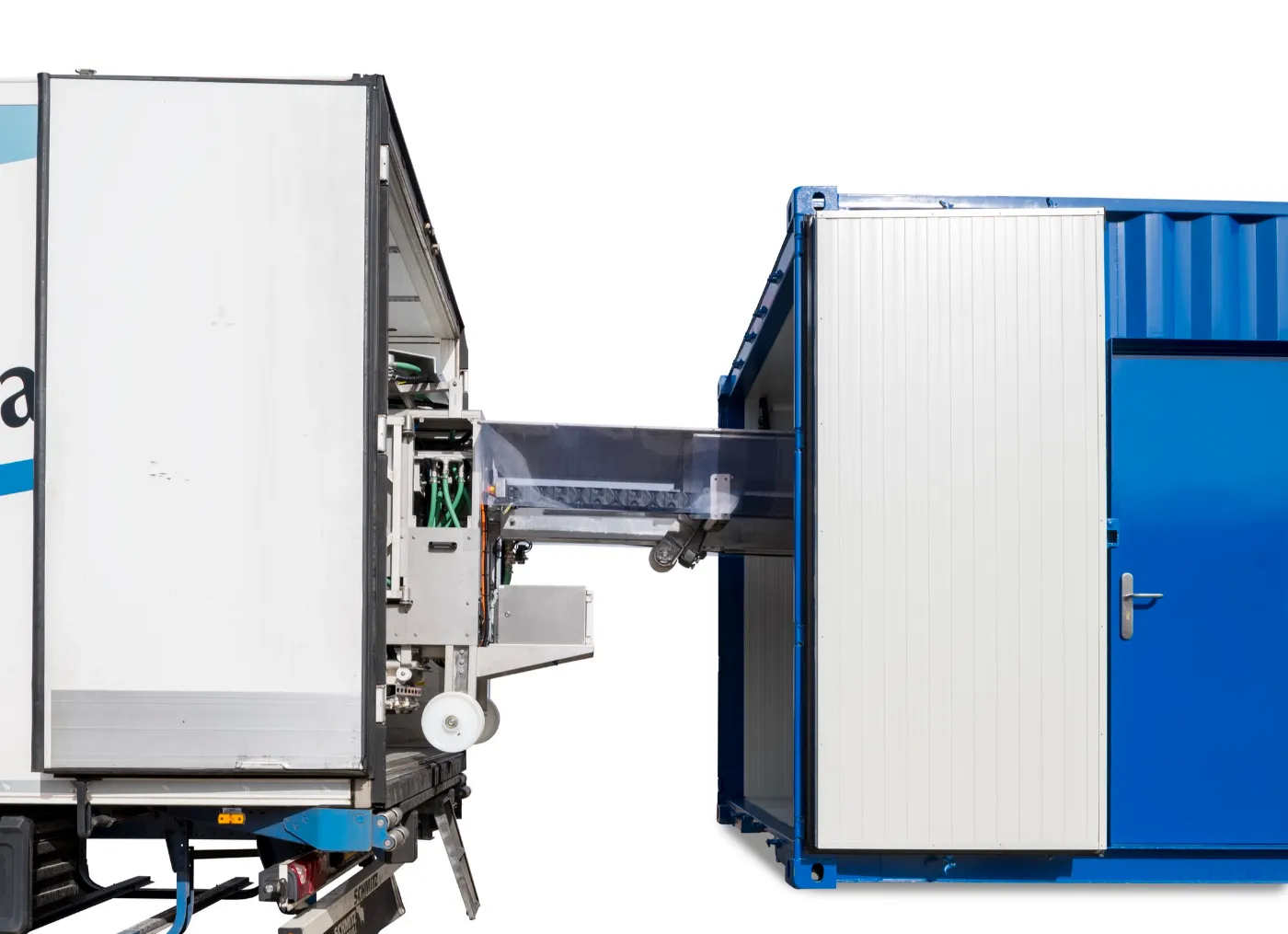
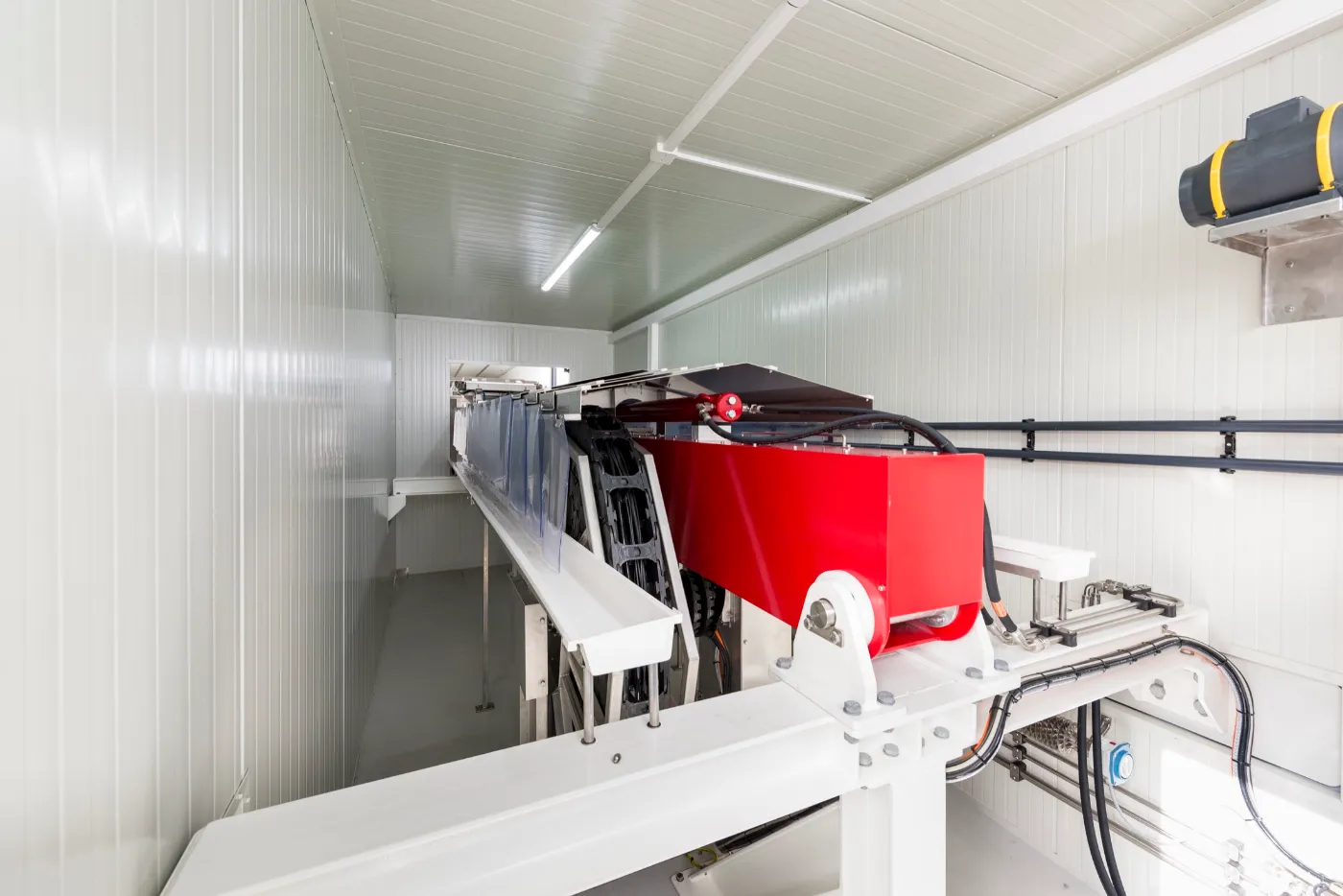
Capacity is decoupled from staffing. The driver docks the vehicle themselves, the telescopic arm with rotating wash head drives in and cleans floor, walls and ceiling, and no operator is needed. The construction is on the page about the robot. What that means for the people on site is in our piece on why nobody needs to enter the cargo space anymore.
A full HACCP wash including disinfection takes at most 15 minutes, so four per hour. The machine runs 24/7 without staff at the wash bay, and one unit can handle up to around 33,000 washes per year. That makes your throughput time per vehicle a number instead of an estimate.
What does it ask of your site?
Less than a construction project. The entire installation fits in a single 40ft ISO container: arm, wash head, chemicals, pumps and technical room. Place it, connect it and wash. It is modular, so you start with one unit and expand when the volume asks for it.
| An extra manual wash bay | A Nexus unit |
|---|
| What you need to arrange | Space, water, drainage and people | Space, water, drainage and a connection |
| Capacity per hour | Depends on who is standing there | Four washes, day and night |
| Throughput time per vehicle | Varies per shift | At most 15 minutes, including disinfection |
| Dependent on the labour market | Fully | Not for the wash itself |
| Maintenance | In-house | Service agreement with HB Group |
What about maintenance and breakdowns?
Through a service agreement with HB Group: monthly maintenance, remote monitoring via wifi and automatic software updates. Breakdowns can be read out remotely, so the first diagnosis costs no visit.
When does it pay for itself?
That depends on two numbers you have yourself: how many vehicles you clean on the inside per day, and what a wash costs you today in wages, time and consumables. Put those two into the ROI calculator and you see from how many vehicles per day it tips over. The outcome is indicative; we make the tailored calculation together.
What changes on top of that is what you can promise a customer. A fixed throughput time, a fixed result and a registration per vehicle are commitments you can keep without knowing who is on shift tomorrow.