Water is a cost that rarely appears on a truck wash invoice and always appears in the annual accounts. Anyone who cleans the inside of trailers with a person and a high pressure lance pays for the water that goes in, for the chemicals that rinse away with it and for the wastewater that has to go somewhere. This piece explains where that water goes, why a fixed wash unit manages with half, and what to ask a supplier.
Why does manual trailer washing use so much water?
Because the hose runs as long as the washer is working, and nobody is watching the cycle. In interior cleaning with a lance the person inside the cargo space decides how much water goes through it: how long they spray, how often they go back over a wall and how much they rinse. The water keeps flowing while the washer walks, bends or moves the lance. Corners and the ceiling are rarely hit properly the first time, so they get a second pass. And there is no fixed contact time for the chemicals: whoever rinses too early starts again, and whoever rinses too late rinses longer.
That is not a criticism of the washer but a property of the method. Thirteen metres of cargo space, a wet floor and a lance that gives water the whole time produce a consumption that differs per shift and per person. What such a manual wash really means in hours and money is worked out in our article on what manual trailer cleaning really costs.
How does a fixed wash unit halve truck wash water usage?
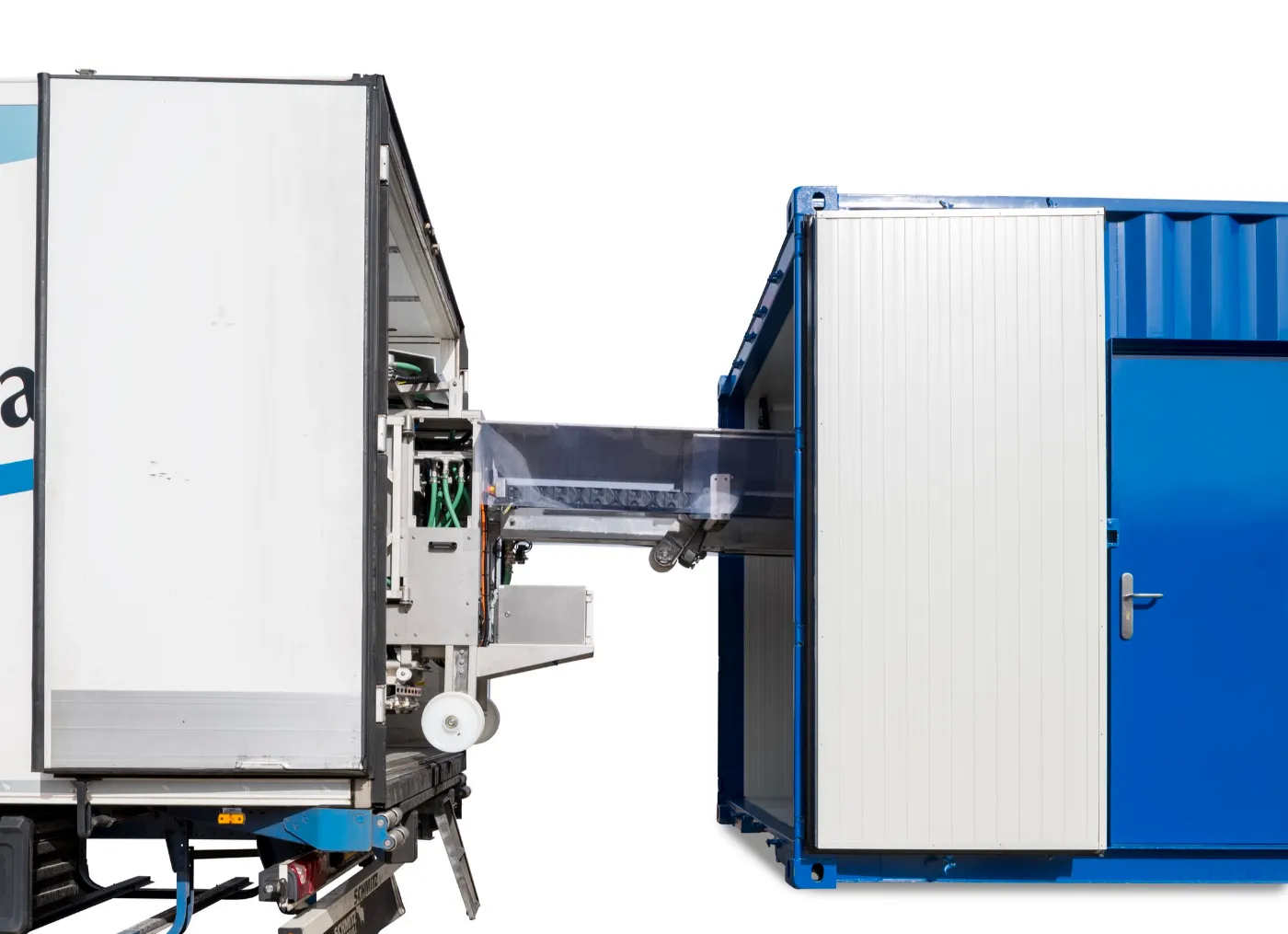
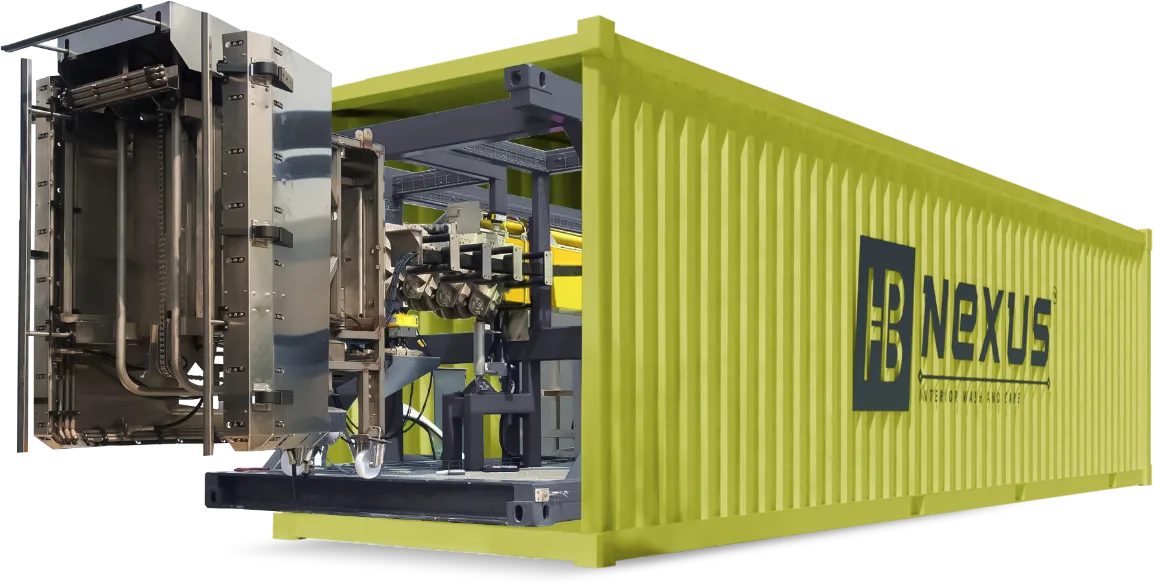
By fixing the cycle instead of leaving it to a person. The HB Nexus uses 50 percent less water per wash cycle than manual washing. That difference sits in four parts. First the telescopic arm, which drives in over the full length of the trailer or container, so the farthest corner gets the same movement as the first metre. Then the wash head, with rotating wash nozzles that cover floor, walls and ceiling in a single pass. The dosing system keeps the chemical dose and the contact time the same every cycle, so rinsing starts at the moment the chemicals have done their work. And the fully automatic control runs a separate programme per type of load, so a light load does not get the water of a heavy one.
Every wash cycle therefore receives the same amount of water as the one before. How the arm and the wash head are built is on the page about the robot, and the three steps from docking to certificate are under how it works.
Manual with a lance
Programmed cycle
Water flow
Open hose while the washer works
Fixed per programme, stops after the cycle
Passes
Repeated for missed corners and ceiling
One pass over the full length
Chemical contact time
By feel, different per washer
Fixed per cycle
Dosing
Mixed by hand
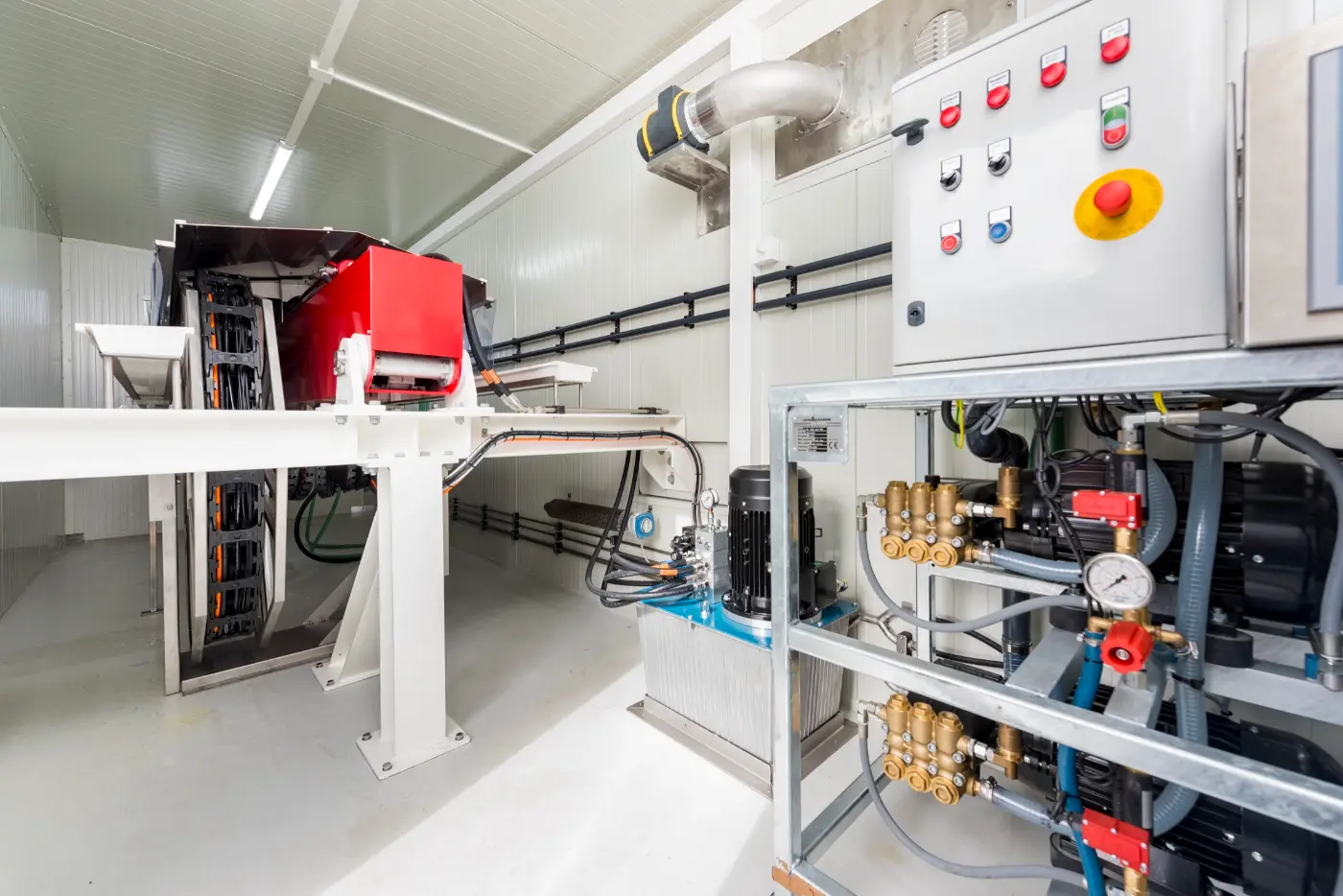
Dosing system in a sealed technical room
Water per wash
Differs per shift and per person
50 percent lower, every cycle the same
Proof
Nothing recorded
HACCP certificate via Nuvix
What does exact chemical dosing do to your discharge?
Less water means less wastewater, and a fixed dose means the composition of that wastewater does not change per wash. In manual washing the concentration changes with the hand that mixes the jug. The dosing system of the Nexus sits in a sealed technical room and doses automatically: exact chemical dosing and contact time, every cycle the same. What goes down the drain is therefore predictable, which is what you need when you agree with your water authority or wastewater processor what you discharge.
We make no statements about discharge conditions: they differ per location, and you know your own permit better than we do. What we can say is that half as much water goes down the drain per wash cycle as with a lance, and that nobody stands in a wet, slippery, chemical cargo space any more. That second point is why we quote 99 percent fewer claims and accidents: the workplace where they happened no longer exists.
What does half the water mean for your costs?
That the marginal cost per wash falls. In the cost model of a wash robot a fixed annual amount for the machine stands against a marginal cost per wash cycle: water, chemicals and energy. Water is the item in that list you can predict best, because the consumption per cycle is fixed. At four wash cycles per hour, day and night, up to around 33,000 wash cycles per year per unit, half per wash adds up to a figure you will see in your annual accounts.
How large that figure is depends on your water tariff, your discharge costs and the number of trailers per day. That is why we give no litres and no euros in an article: those numbers belong to your set-up and are supplied per location. You can run the logic yourself in the ROI calculator, with your own wash price and your own volumes.
Does less water come at the expense of the result?
No, and that has been measured independently. CCD Cleaning Consultancy tested in November 2024 what a Nexus wash cycle does to the microbial load in a box: 63 percent less after the wash, and 33 percent cleaner than manual washing. The full report is available on request. A fixed contact time lets the chemicals do their work before rinsing starts, and an arm that drives in over the full length misses no corner. Less water here is no economy on the result; it is the consequence of a cycle that does nothing twice.
For food, pharma and chemicals it also matters that every wash cycle is the same: 100 percent consistent, without varying quality per shift or per washer, and recorded in a HACCP certificate. What a robot does differently from a person with a lance inside a box is set out in our article on container interior cleaning with a robot.
What should you ask a supplier about water consumption?
Ask for figures per set-up, not for a percentage. A 50 percent saving is only worth something once you know what it is measured against and under which conditions. We supply the full technical specifications, including connection values and consumption in litres, per location, because they differ per set-up. Five questions for any conversation:
How much water does a full cycle use in my set-up, and with which programme was that measured?
Is the consumption per cycle fixed, or does it depend on who operates the machine?
How are the chemicals dosed and where are they stored?
What goes down the drain per wash, and is it the same every time?
Which maintenance arrangements cover the dosing system and the pumps?
For the HB Nexus we prefer to answer those questions next to the machine. A demo shows how a cycle runs and what comes out of the drain afterwards; you can book one on the demo page. Bring your own consumption figures.
That differs per set-up, per programme and per method, which is why we quote no fixed number of litres. What is fixed is the ratio: an HB Nexus wash cycle uses 50 percent less water than manual washing with a lance. The full technical specifications, including consumption in litres and connection values, are supplied per location, because they differ per set-up.
Can a wash robot also recycle the wash water?
+
The saving of the HB Nexus sits at the front: half as much water goes into the cargo space per wash cycle, so half as much comes out. Whether you also collect, treat and reuse wash water is a choice that belongs to your location and your discharge arrangements. We discuss those options per set-up, not in an article.
Does a wash robot use fewer chemicals than manual washing?
+
A wash robot uses the same amount of chemicals every cycle, and that is the difference that counts. The dosing system of the Nexus provides exact chemical dosing and contact time, every cycle the same, from a sealed technical room. We quote no saving percentage for chemicals, because that depends on how your washers dose today. Mixing by hand does disappear.
How long does a full wash cycle take?
+
A full HACCP wash cycle including disinfection takes at most 15 minutes. That means 4 wash cycles per hour, day and night, up to around 33,000 wash cycles per year per unit. Because the programme is fixed, the water used in those 15 minutes is the same every time, whoever docked the trailer and whatever the hour.