HACCP transport cleaning: what a carrier must organise, from cargo space to records
·6 min read·HB Nexus
Most people who search for HACCP transport cleaning have just had it land on their desk. A new food customer sends a supplier questionnaire, a shipper asks for the HACCP manual, or an auditor books a visit. Then it turns out the drivers do the work well, but nobody can show exactly what happens and why. This article sets out what HACCP means for a carrier and where most of the questions end up: the cargo space.
What does HACCP mean for a transport company?
HACCP stands for Hazard Analysis and Critical Control Points. It is a method in which a business maps where food can become contaminated or damaged, and records for each risk how it is prevented, checked and logged. For a producer that is about ingredients and processes. For a carrier it covers everything between loading and unloading: the vehicle, the cargo space, the temperature and the way the load is placed.
How you show compliance differs per country. In the Netherlands, for example, the NVWA accepts two routes: applying the Hygiene Code TOD for transport, storage and distribution of food and registering with the NVWA, or working with your own certified HACCP manual. Check the current rules with the food safety authority in your country.
Which HACCP rules apply to the cargo space in transport?
In the EU the basis is Regulation (EC) No 852/2004 on food hygiene, Annex II, Chapter IV on transport. The rules are short and practical, and nearly all of them are about the cargo space. In summary:
Vehicles and containers carrying food are kept clean and in good repair, so the load is not contaminated.
Where necessary they are designed and built to allow adequate cleaning and disinfection.
When different products travel together, they are effectively separated where necessary.
After a load that was not food, or a different food, there is effective cleaning before the next load goes in.
Note the word effective. The regulation does not prescribe a product, a temperature or a wash time. It asks that the cleaning works. That makes the proof more important than the method: you have to be able to show that there was a clean between two loads, and that it was the same clean every time.
What belongs in a carrier's HACCP plan?
Every plan is different, because every load carries different risks. A carrier of packed dry goods has fewer than one moving fresh meat or pharmaceutical ingredients. Even so, nearly every transport plan comes back to the same parts.
Part of the plan
What you record
Condition of the cargo space
Check before loading: clean, dry, no damage or odour
Cleaning between loads
When, with which programme and by whom or what
Separation of products
Which loads may travel together and how they are kept apart
Temperature
Where needed, the load temperature and how it is monitored
Records
Where the data is kept and for how long
With chilled loads the cleaning weighs more, because moisture and low temperatures together give micro-organisms a place to survive. Why reefers come round for a wash more often is covered in our article on reefer washouts and HACCP.
When does the cargo space have to be cleaned?
The regulation names at least the moment after a load that was not food, or after a different food. Beyond that, your own HACCP plan or your customer's decides how often you wash. With fresh and chilled produce that is often after every trip. On a fixed route with the same packed product, the plan may allow a different frequency.
What a proper wash of the cargo space has to reach, from floor to ceiling and from cleaning to disinfection, is set out step by step in our article on food grade trailer washouts. This piece is about the question that comes after it: how do you show that it happened?
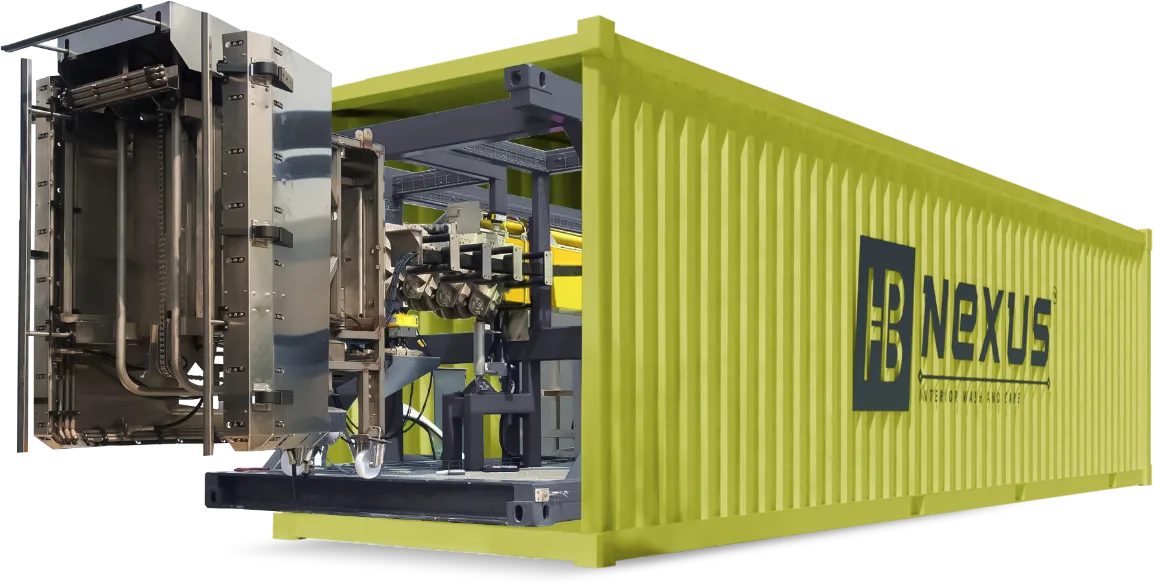
The Nexus sits in a 40ft ISO container and cleans trailers and containers inside.
How do you prove the cleaning at an audit?
With a record for every wash, linked to the vehicle. An auditor does not look at one wash but at the series. Was there a wash after every trip that needed one? Was the clean the same each time? And can you find it per registration and per date? A folder of signed forms sometimes answers the first question and hardly ever the second.
What that proof looks like when it is created automatically is shown on the page about the Nexus HACCP certificate: for every wash the registration, programme, duration and record, via Nuvix and searchable in the customer portal.
How does a wash robot make HACCP transport cleaning easier?
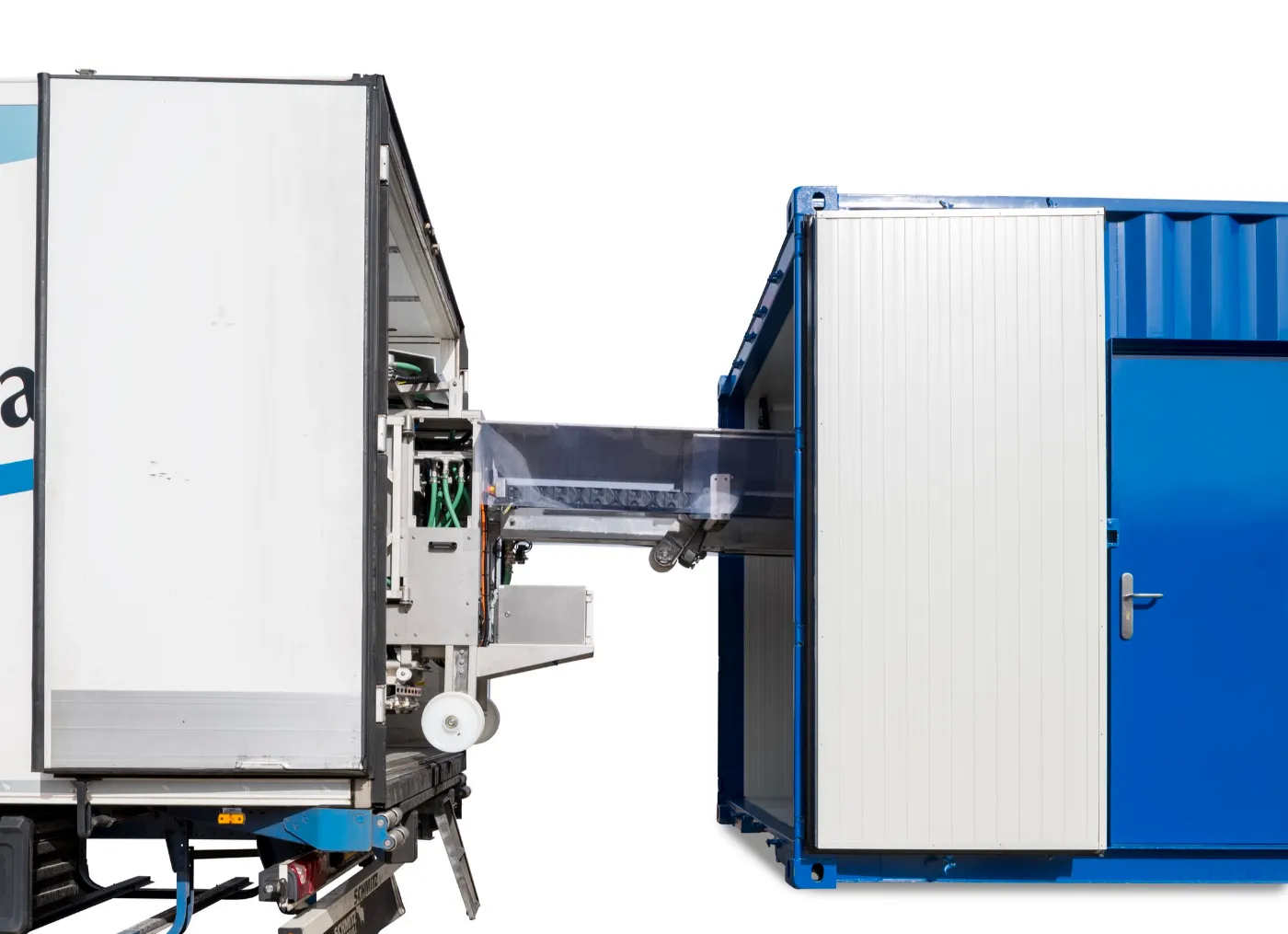
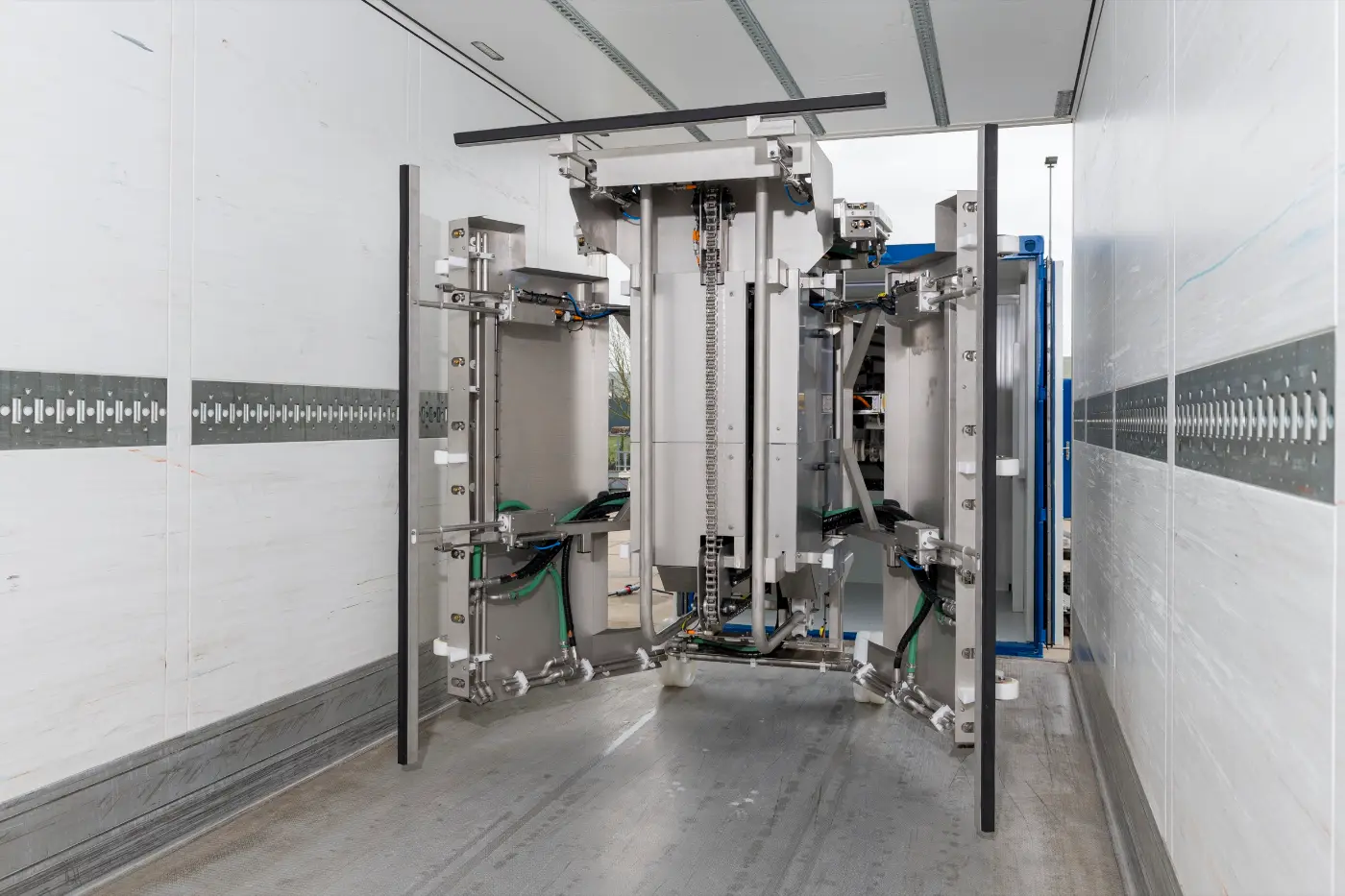
By letting the two things an auditor wants to see, consistency and proof, come from a machine instead of a person. The HB Nexus is a fully automated washing robot in a 40ft ISO container. The driver docks the trailer or container himself, a telescopic arm drives the full length inside and cleans floor, walls and ceiling. The dosing system gives every cycle the same chemicals and contact time, with a programme per type of load.
A full HACCP wash cycle including disinfection takes at most 15 minutes, day and night. Every wash automatically produces a digital HACCP certificate via Nuvix. The machine suits the food industry, the pharmaceutical sector and the chemical industry, and is built by HB Group, founded in 2017, which knows the work inside the box from its own truck wash at Maasvlakte and Europoort.
To see how that would work on your yard, with your trailers and your loads, you can book a demo.
A business that carries food has to keep food safety under control and be able to show it. EU hygiene law builds on HACCP principles, and national authorities decide how you prove it. In the Netherlands, for example, that is the Hygiene Code TOD plus NVWA registration, or an own HACCP manual. Check the current rules with your national food safety authority.
What does the EU say about cleaning food transport vehicles?
+
Annex II, Chapter IV of Regulation (EC) No 852/2004 says vehicles and containers carrying food must be kept clean and in good repair, be designed for adequate cleaning and disinfection where necessary, and be cleaned effectively between loads when they carried something other than food or a different food.
How often should a trailer be cleaned under HACCP?
+
There is no single interval for every carrier. EU rules ask for effective cleaning between loads when something else was carried before. Beyond that, your own HACCP plan or your customer's sets the frequency, depending on the type of load. With fresh and chilled produce that is often after every trip.
Do the HACCP rules apply to containers as well?
+
Yes. Annex II of Regulation 852/2004 refers throughout to vehicles and containers carrying food. A container must also be kept clean and in good repair and be cleaned effectively between different loads. The Nexus cleans both trailers and containers inside, with the same certificate for every wash.