Container interior cleaning: what a robot does differently
·5 min read·HB Nexus
A container is a thirteen-metre box with one opening. Everything that has to happen inside it happens from that one side. That makes cleaning the inside something different from washing the outside: you work in an enclosed space, with water and chemicals, on a floor that turns slippery the moment you start. This article describes what container interior cleaning involves and what changes when a robot does it.
What does container interior cleaning involve?
Removing everything the previous load has left behind, from floor, walls and ceiling. Not only the visible dirt: also dust, residues in the corners and whatever has stuck to the top. A container that looks fine from the outside can still hold half a load of dust on the inside.
The question afterwards is always the same: is this clean enough for what goes in next? For a general cargo carrier that bar sits somewhere else than for a carrier in food, pharma or chemicals. What those three industries ask for is described in our piece on interior cleaning for food, pharma and chemicals.
Why is manual cleaning so laborious here?
Because someone has to go into the box. With a lance, in a space that gets wet and slippery, with chemicals in the air and thirteen metres to cover. The work is heavy, and the quality depends on who does it and how late in the day it happens.
A lance does not dose. The amount of chemicals and the contact time therefore differ per person and per wash. That is not criticism of the people who do it, it is a property of the method. What that method really costs once you include waiting time, consumption and record keeping is set out in our article on the cost of manual cleaning.
How does the HB Nexus clean a container?
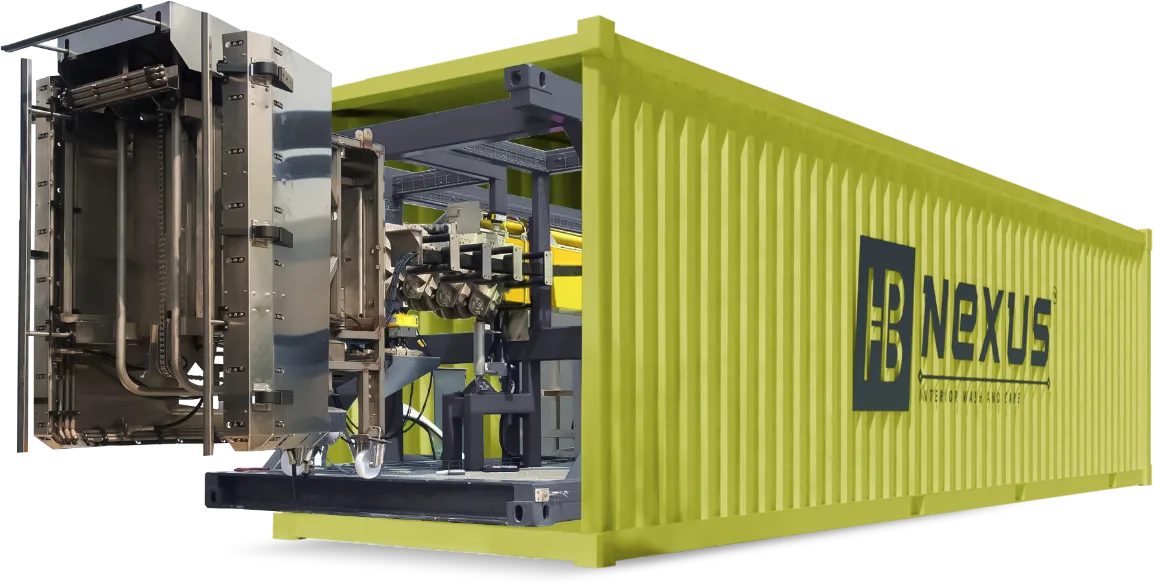
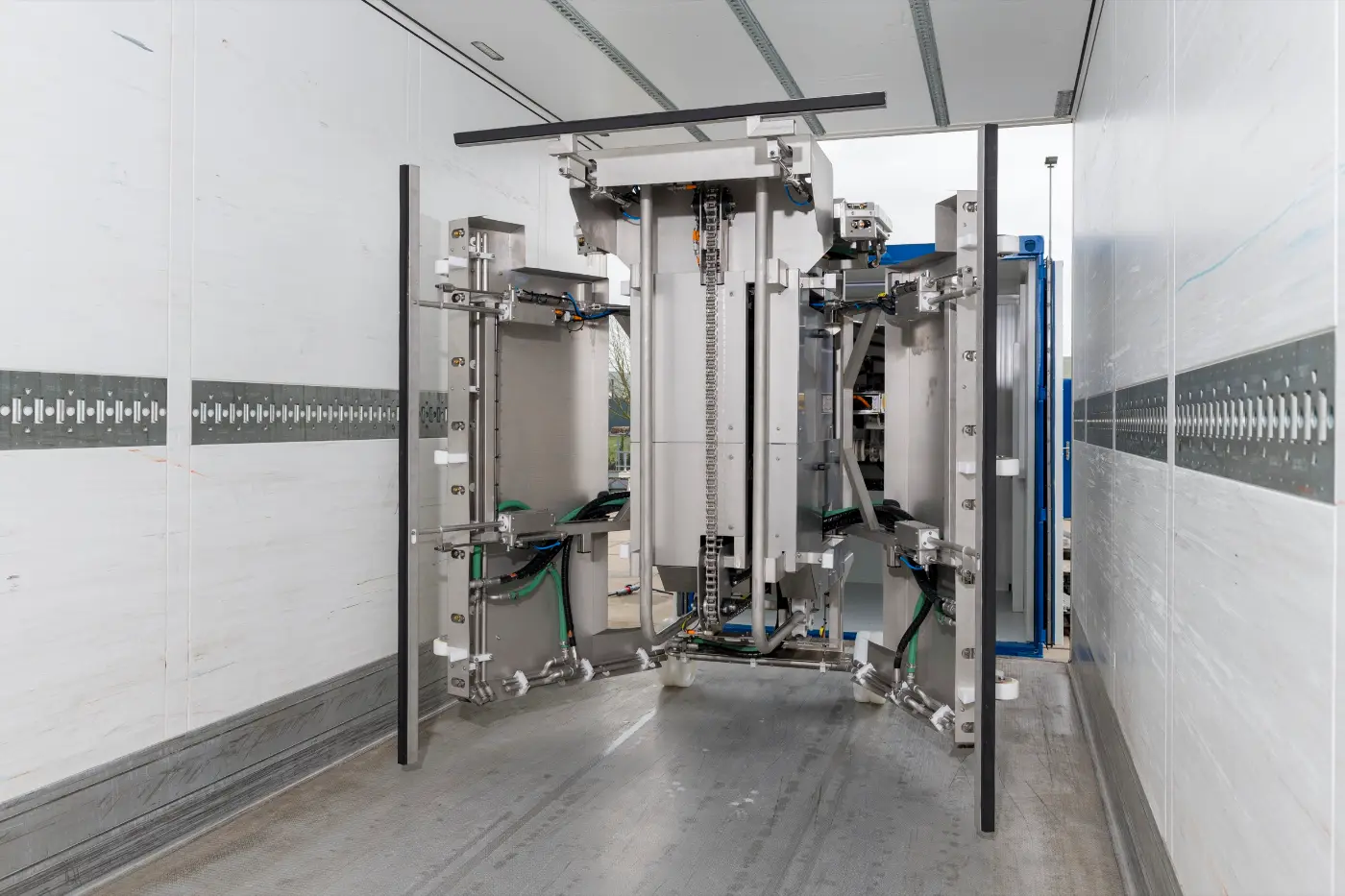
The container docks, a telescopic arm with a rotating wash head drives in and covers floor, walls and ceiling over the full length. Collision protection with sensors monitors the docking. The chemicals sit in a sealed technical room and are dosed automatically. How the machine is built is described on the page about the robot.
Each cargo type runs its own programme, from food residues to chemical residues, without manual cleaning in between. A programme fixes the dosing, the contact time and the movement of the arm. That makes the wash on Monday morning the same as the one at the end of a Friday shift.
What does a fixed cycle deliver?
Predictability, in three places at once. In the planning, because a full HACCP wash including disinfection takes at most 15 minutes and the machine runs 24/7 without staff at the wash bay. In consumption, because the dosing is the same every cycle and a wash uses 50 per cent less water. And in the result, because there is no human influence left in it.
Manual
HB Nexus
Who goes into the container
An employee with a lance
Nobody
Dosing and contact time
Differs per person and per wash
Fixed per programme, the same every cycle
Duration of a wash
Depends on the day and the staffing
At most 15 minutes, including disinfection
Availability
Tied to shifts
24/7, without staff at the wash bay
Evidence afterwards
A logbook someone fills in
HACCP certificate, created by the machine
How do you know afterwards that it was done?
Every wash automatically produces a digital HACCP certificate through Nuvix, with the wash number, the licence plate, the programme that ran, the actual duration and the status. It is created the moment the cycle finishes, by the machine, without anyone filling anything in. What such a certificate looks like is shown field by field on the page about the HACCP certificate.
All certificates are searchable in the customer portal by vehicle and by date. Whether a client asks about one container or an auditor about a series covering half a year, the answer is a search and not a reconstruction from a folder.
What does this mean for a wash bay or terminal?
The entire installation sits in one 40ft ISO container: arm, wash head, chemicals, pumps and technical room. Place it, connect it and wash. No operator is needed, because the driver docks on their own and the machine does the rest.
Whether it pays off depends on your number of vehicles per day and what a wash costs you now. You can work out that sum yourself with the ROI calculator.
A full HACCP wash including disinfection takes at most 15 minutes. That means four washes per hour, day and night.
Can the Nexus handle both containers and trailers?
+
Yes. The telescopic arm drives the full length of a trailer or container and cleans floor, walls and ceiling. For each cargo type you choose the matching programme.
How much water does a wash use?
+
A wash with the Nexus uses 50 per cent less water than washing by hand. The dosing is the same every cycle, so consumption is predictable too.
Does anyone still go into the container?
+
No. The driver docks and the robot does the work. The chemicals sit in a sealed technical room and are dosed automatically, so nobody at the wash bay comes into contact with them.