Anyone searching for cleaning of transport equipment quickly encounters two worlds that look alike and are not. On one side tank cleaning, on the other side the interior cleaning of trailers and containers. Both are about cleaning something that has carried a load, and that is roughly where the similarity ends. This article lines up the difference, so you know which of the two you are actually looking for.
What is the difference between a tank and a box?
The shape and the access. A tank container is a closed cylindrical vessel. The only opening is a manhole, usually on top. A box trailer or box container is a rectangular space with a door across the full width, which a person can walk through.
That difference determines everything that follows. With a vessel it is about reaching an inner wall that curves around, through an opening you cannot look through. With a box it is about three surfaces you can see, over a length of thirteen metres, where the corners and the ceiling are the hardest part.
Why does that require a different kind of machine?
Because the tool follows the shape. An installation that covers a vessel from a single point at the top is something different from an installation that drives into a cargo space along its full length. These are different movements, different distances and different ways of reaching the farthest corner.
On top of that, a tank counts as a confined space in many cases, with its own rules for entry. The cargo space of a trailer is not, but someone still has to go in with a lance today. That is precisely the problem we have solved, and it is a different problem from the one the tank cleaner faces.
What is the HB Nexus built for?
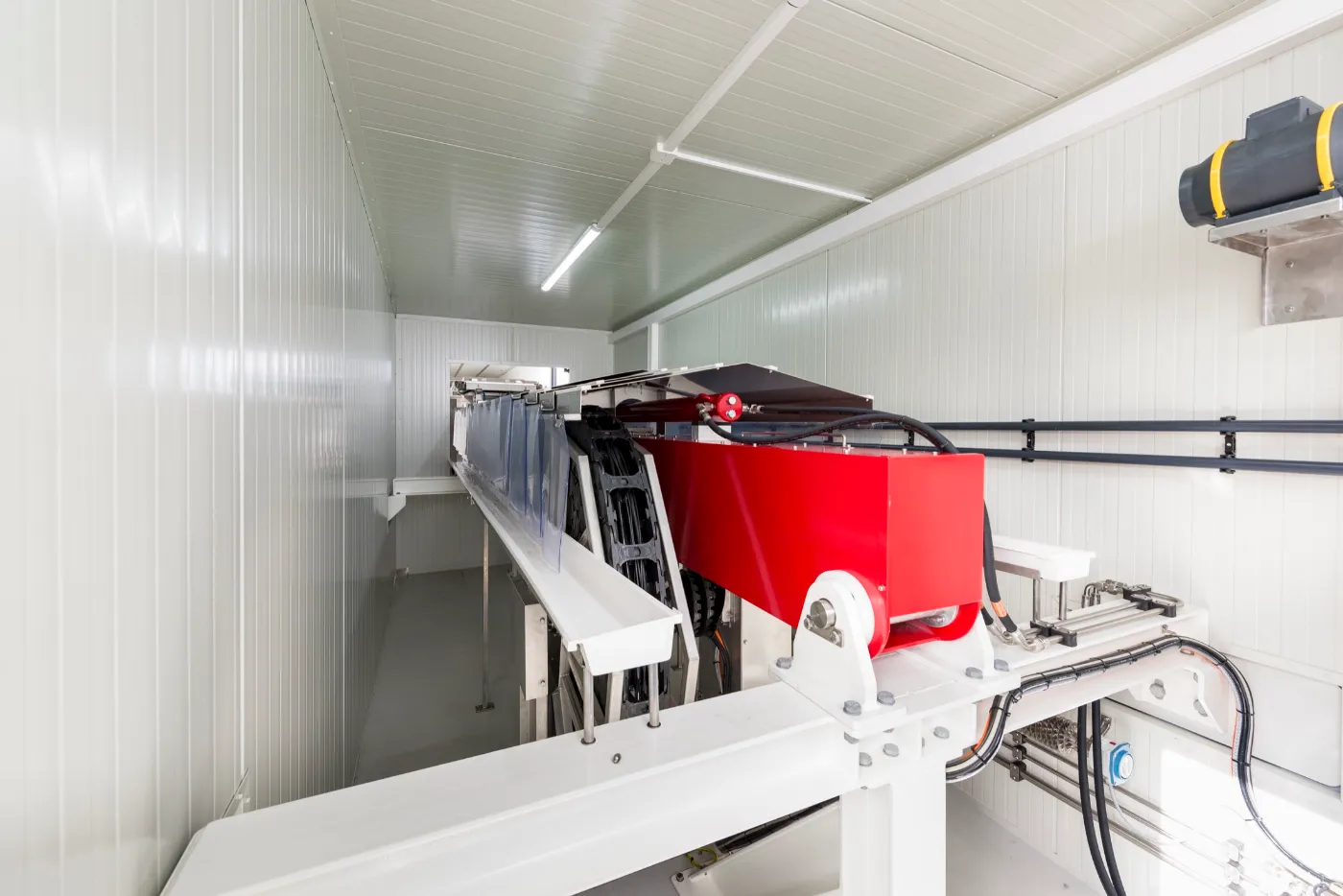
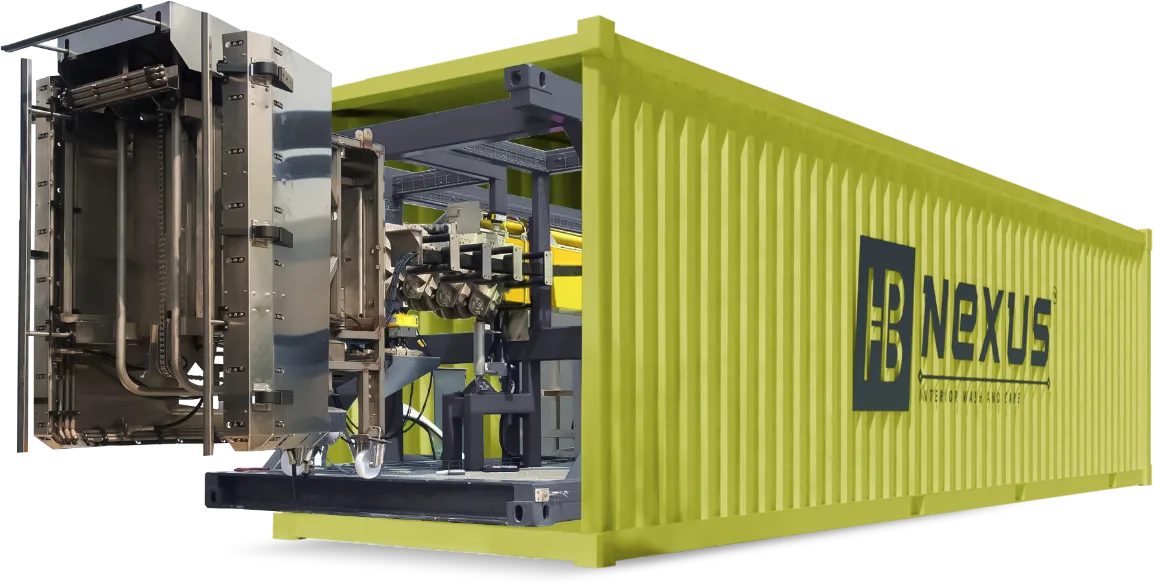
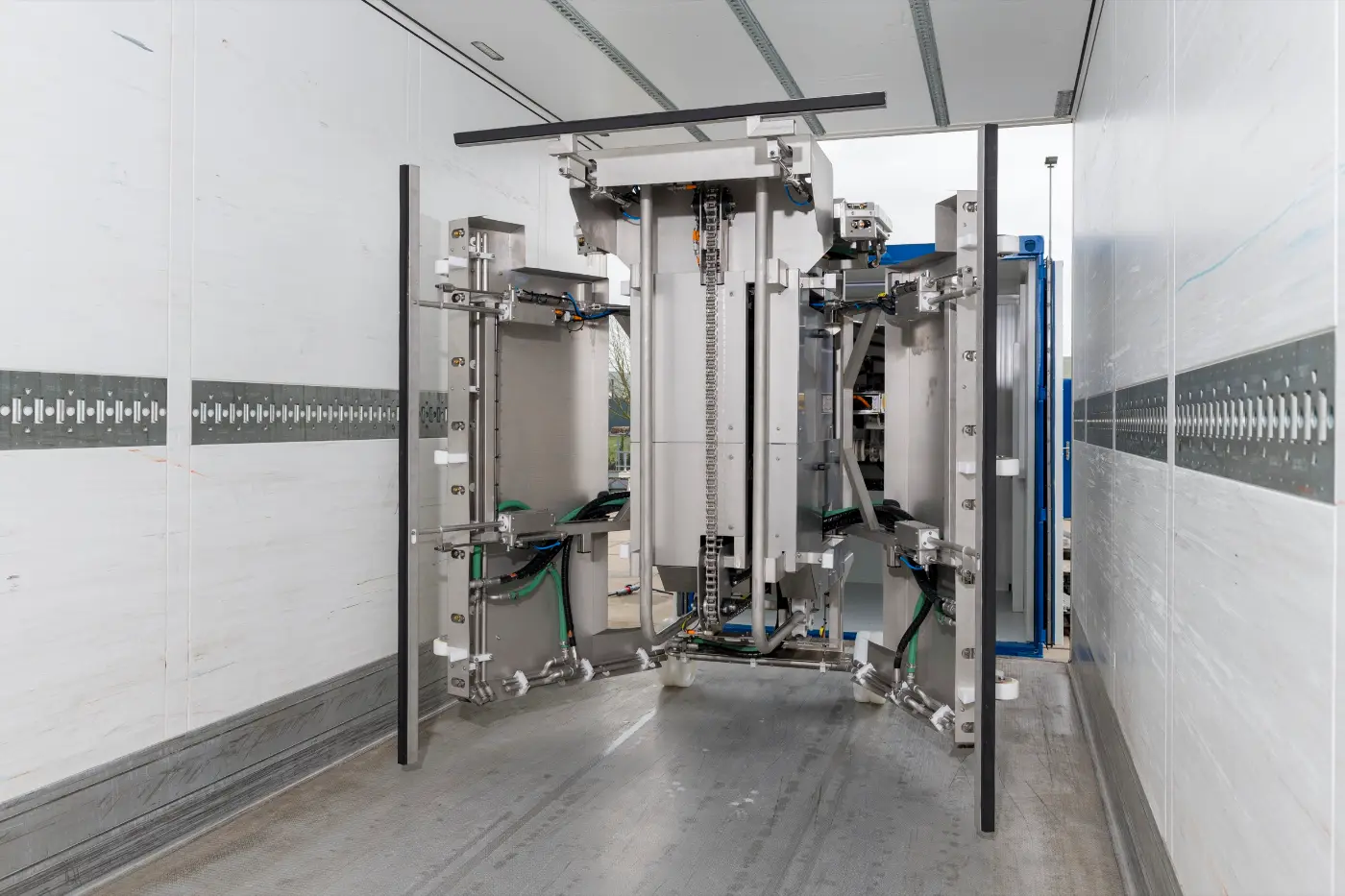
For the interior of trailers and box containers. A telescopic arm with a rotating wash head drives the full length inside and cleans floor, walls and ceiling. The construction of the machine is on the page about the robot. What such an installation exactly is and how it works is in our piece about what a trailer cleaning system is.
Not for tank containers. That is not modesty but a fact about the machine: it is designed around a cargo space with a door, not around a vessel with a manhole. If you are looking for tank cleaning, you have come to the wrong address with us, and we would rather say that now than after a demo.
| Tank container | Box: trailer or container |
|---|
| Shape | Closed cylindrical vessel | Rectangular space |
| Access | Manhole | Door across the full width |
| What needs to be cleaned | The inner wall of the vessel | Floor, walls and ceiling, over the full length |
| How it often happens now | With a dedicated installation for vessels | With a person and a lance |
| Does the HB Nexus do this? | No | Yes |
What does this mean for a mixed fleet?
That you are dealing with two processes and therefore with two answers. For the tanks you stay with the party or the installation that is set up for that. For the boxes the question is whether you want to keep doing the manual work or not.
That second question becomes sharper as your customers demand more evidence. What food, pharma and chemicals require in terms of demonstrability is in our article about interior cleaning for food, pharma and chemicals.
How do you know which process your load requires?
Start with the equipment and not with the load. Is your product in a vessel, then it is tank cleaning. Is it on pallets, in boxes or loose in a cargo space, then it is interior cleaning of a box. Only after that comes the question which programme or which method suits that specific load.
If you are in doubt about your own situation, we will look along without a trajectory being attached to it straight away. The most frequently asked questions are at the frequently asked questions, and for everything not listed there you can get in touch.